
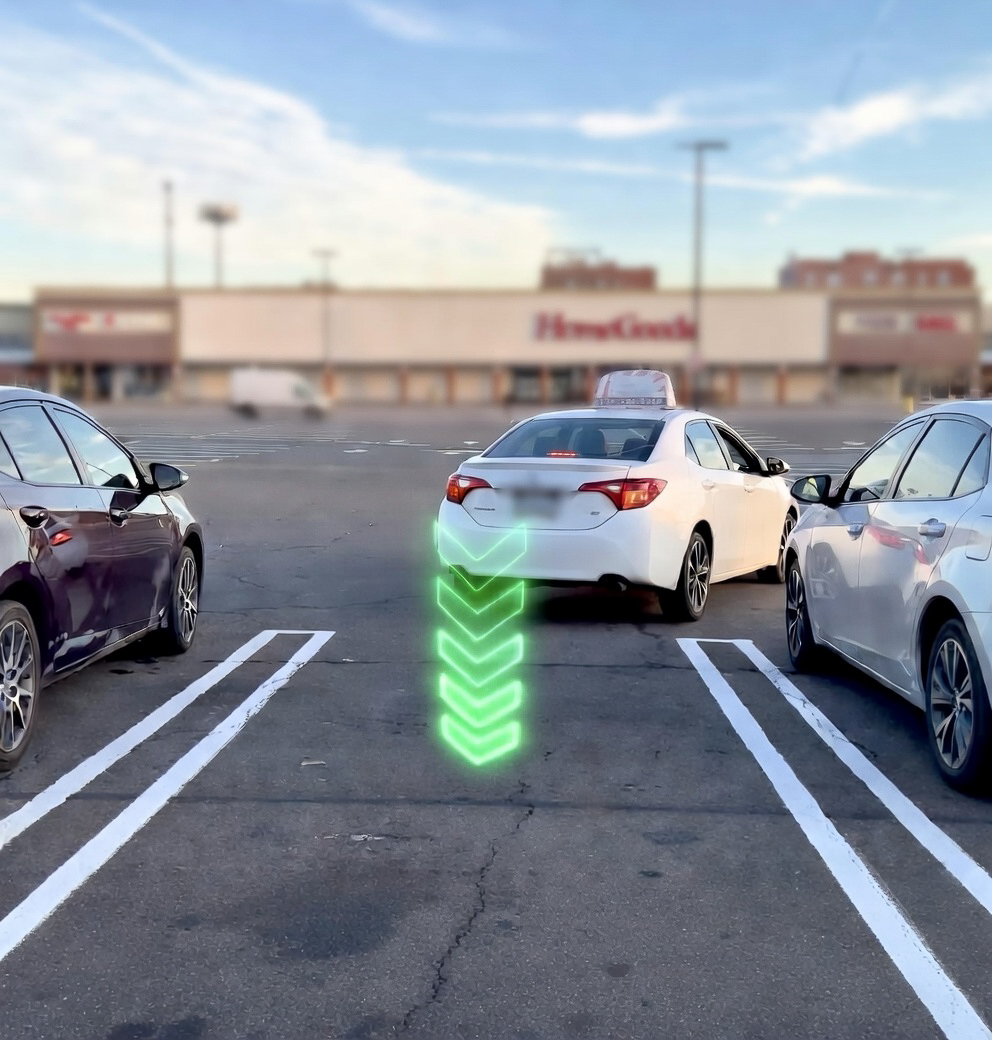
I have been teaching people to drive in New York City for a long time. And I can tell you — the parallel park is not what fails people on the road test. What fails people is trying too hard to make it perfect. They second-guess every inch, they keep adjusting, and then they hit the curb. You only need to be within 12 inches of the curb. That’s a lot of room. Most students don’t realize that because nobody told them.
Once you have your license, a different set of problems comes up. Reading a sign wrong and getting a ticket. Forgetting alternate side day. Parking too close to a hydrant and coming back to a $115 fine. This guide covers all of it — how to read parking signs, the rules that apply everywhere in the city, how alternate side works, and how to do the parallel park step by step.
Understanding NYC Parking Signs
When you see a pole with multiple parking signs on it, always read from the top sign down. The top sign is the main rule. The signs below it show the exceptions — usually by day or time. The mistake I see all the time is people reading the bottom sign first because it’s at eye level. That’s how you end up with a ticket on a block you thought was free.
There are three types of signs to know. No Parking — you can stop to drop someone off or load bags, but you cannot leave the car. No Standing — you can only stop long enough for a passenger to get in or out, nothing else. No Stopping — you cannot stop at all, not even for a moment. No Stopping is most common near bus stops, hydrants, and intersections. If you see it, keep going.
The NYC Parking Rules Every Driver Must Know
The signs cover the rules for that specific block. But there are also rules that apply to every street in the city, no sign needed. Traffic agents know these by heart. You should too.
Minimum distance from a fire hydrant
Starting fine for a NYC hydrant ticket
No parking before a stop sign or traffic light
Typical alternate side parking fine
Fire Hydrants
Stay at least 15 feet away from a hydrant on both sides — about one car length. This applies 24 hours a day, every day, whether there’s a sign or not. I’ve had students try to convince themselves their car is shorter than it is. When you’re not sure, just leave more space. Hydrant tickets start at $115 and nobody gets a pass for “I was only going to be five minutes.”
Intersections and Crosswalks
No parking within 30 feet of a stop sign or traffic light. You also cannot park in a crosswalk or block someone’s driveway — not even a little bit. I have heard “I was barely in the crosswalk” many times. It doesn’t matter. An inch is enough to get a ticket.
Bus Stops and Bike Lanes
Both are No Standing zones and both are heavily ticketed. A lot of bus routes now have cameras on the buses themselves, so it’s not just traffic agents anymore. Bike lanes are painted on the road — if your car is in one, the ticket is coming. Before you pull over anywhere, look at the curb and look up at the sign post.
Alternate Side Parking: The NYC Ritual
If you park on the street in Brooklyn or Staten Island, alternate side parking is part of your life now. The city needs to sweep the street, so on certain days and times, you have to move your car off one side of the block. Every block has its own schedule — it might be once a week or twice a week. Check the sign on the block where you are parked, not the one near your house.
The sign will say something like “No Parking 8:30–10 AM Mon & Thurs.” That means move your car during that window. Most people just double-park or sit nearby until the sweeper goes by, then pull back in. That’s fine — but you have to stay with the car. If you leave it unattended while double-parked and a traffic agent comes by, that’s a ticket.
Most Common NYC Parking Mistakes (and How to Avoid Them)
- Parking too close to a hydrant — always count 15 feet
- Reading the bottom sign first — always read top to bottom
- Forgetting alternate side day — set a weekly phone reminder
- Parking in a bike lane — look for the painted marking on the road
- Stopping in a No Standing zone to “just run in for a second”
- Blocking a driveway, even a little — even 6 inches counts
- Missing temporary No Parking signs for construction or filming
- Thinking no sign means free parking — always check the curb too
Two apps to have on your phone before you need them: NYC311 lets you look up the alternate side rules for any specific block. The NYC DOT website has a holiday suspension calendar — the city pauses alternate side on certain holidays, but the list changes and not every holiday you’d expect is on it. Check at the start of each month.
How to Parallel Park in NYC — Step by Step
Most students who think they’re bad at parallel parking are not actually bad at it. They just haven’t done it enough times for it to feel normal. It’s a set of steps. Do the steps, and it works. Here’s how I teach it.
Step-by-Step: Parallel Parking
- Find a space with enough room. When you’re still learning, look for a gap at least six feet longer than your car. Signal right so other drivers know you’re stopping. Don’t try to squeeze into a tight spot until you’ve done this many times.
- Pull up next to the car in front of the space. Keep about two feet of space between your car and theirs. Stop when your rear bumpers are about even. This is your starting position — take a moment to get it right before you do anything else.
- Reverse, then turn the wheel all the way right. Back up straight until the rear of the car in front lines up with your back door. Then cut the wheel hard right and keep reversing slowly. Check your passenger mirror — you should see a triangle shape between your car, the curb, and the road.
- Straighten the wheel as you get closer to the curb. When that triangle in your mirror starts to go away, straighten the wheel and keep reversing. Your front bumper should be clearing the car in front of you at this point.
- Turn the wheel all the way left to bring your front end in. Reverse until your car is sitting parallel to the curb. A good sign you’re at the right moment: the license plate of the car in front of the space is centered in your windshield.
- Pull forward to center yourself. Shift into drive, straighten the wheel, and ease forward until you have roughly equal space in front and behind. Leave enough room for the other cars to get out.
- If something goes wrong, start over. Pull out, line up again, and try it fresh. Two clean attempts is always better than ten minutes of small corrections.
For the road test: backup cameras are not allowed. You have to use your mirrors. Also — the examiner does not care if the spot is legal. They may ask you to park next to a hydrant or in front of a driveway. That’s normal. They are only watching how you do the maneuver, not where you end up. Once you have your license, use your backup camera all you want. Most cars have one now and it makes everyday parking much easier. Just learn the steps first so you’re not lost when the camera isn’t there.
Parking on Hills: Curbing Your Wheels
A lot of people don’t know this rule. When you park on a hill, you have to turn your wheels a certain way so that if your brakes slip, the car rolls into the curb instead of into traffic. Facing downhill — turn the wheels toward the curb. Facing uphill — turn the wheels away from the curb so they catch on it if the car rolls back. Many blocks in Brooklyn and Staten Island have more of a slope than they look like from inside the car, so get into this habit early.
What to Do When the Space Is Tight
You will find tight spaces all the time in this city. The main thing is to slow down and take your time. Check your mirrors, watch your angles, and if you misjudge it, pull out and start again. A second try is much faster than dealing with a damaged car.
And please — do not tap the bumpers of the cars around you. Some people treat it as normal in New York, but it’s not okay. Even a small bump can cause damage you can’t see. Always leave a few inches of clearance front and back.
Metered Parking and the ParkNYC App
Most metered parking in New York City now uses Muni-Meters — the pay machines on the sidewalk, not meters at each individual space. You pay at the machine, type in your license plate, and put the receipt on your dashboard. Most neighborhoods enforce meters Monday through Saturday, roughly 8 AM to 7 PM, but this changes block by block. Check the meter sign before you assume you’re good.
The ParkNYC app lets you pay from your phone and add more time without walking back to the machine. Download it now, before you need it. Setting it up while a traffic agent is already writing your ticket is not fun.
What I Tell My Students
Parking is something we work on in lessons because it’s something you will do every single day once you’re driving on your own. I want students to leave knowing how to find a legal spot, read the signs, and get the car in cleanly. Not because it’s the most exciting part of driving — but because getting it wrong is expensive and stressful, and getting it right just makes your life easier.
The rules make sense once you know them. And the parallel park gets easy once you stop fighting it and just follow the steps. If you want to practice any of it with someone in the car, that’s what lessons at Super Starz are for.
Sources & Further Reading
- NYC Department of Transportation — NYC Parking Regulations
- NYC Department of Finance — Parking Violations and Fine Schedules
- NYC311 — Alternate Side Parking Suspension Calendar
- New York State DMV — Road Test Requirements: Parking Maneuvers